A Message from ALC's Executive Director, Aarti Kohli
On Friday night, I got a text: "Impending ICE raids in Chinatown here in LA (Hill and Cesar Chavez) - people need to know." The immigrant justice community had prepared for this moment with rapid response networks throughout the state, but nothing prepared us for the complete denial of access—turning away not just attorneys but members of Congress from detained community members. By Sunday, National Guard troops were already deployed in LA alongside federal agents, with threats to expand to more cities. It felt ominous to watch the government create fear and stoke violence while blaming protesters for the very chaos they're orchestrating.
Like many of you, the mention of authoritarianism brings to mind reports of dramatic coups, tanks in the streets, suspended elections. But the reality is more complex. Authoritarianism can arrive quietly through gradual erosion. It can also strike when authorities find their excuse, like in LA, where manufactured chaos became the justification for the deployment they were planning all along.
Crossing Constitutional Lines
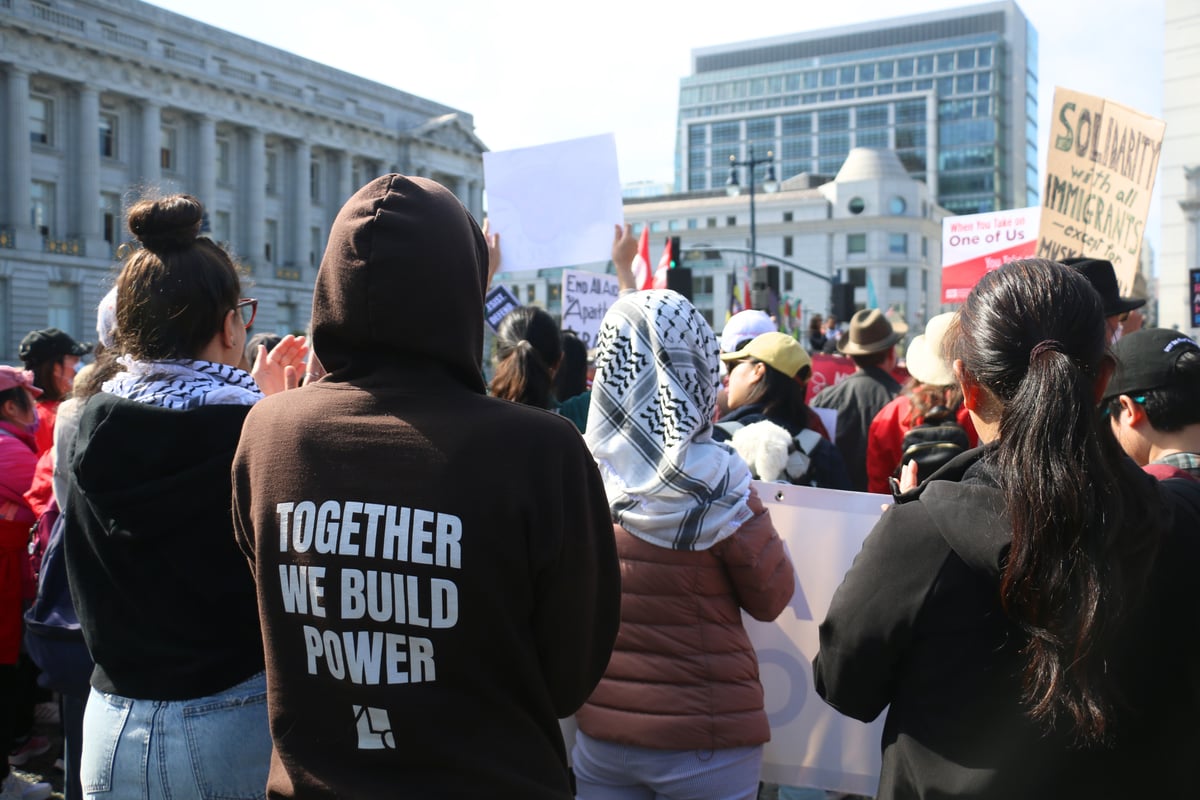
Communities are doing what Americans have always done: lawful protest, free expression, and speaking out against injustice. Exercising our constitutional rights is the highest form of patriotism. National Guard troops have no business turning their aim toward the very communities they have sworn to protect.
We absolutely still have our rights to protest and free speech, and we must boldly exercise them. But when military troops stand alongside federal agents, it creates a chilling effect on these constitutional freedoms. The Posse Comitatus Act exists to prevent soldiers from becoming police—we must ensure this protection holds and that the National Guard doesn't evolve into a tool for suppressing legitimate dissent.
The Administration has crossed a line. In choosing to escalate rather than listen, to pick fights rather than seek solutions, they endanger the very Americans they claim to serve. These deployments seek to project federal power in defiance of democratic norms, using the military as a political weapon to intimidate and silence our communities.
Why This Matters Now
The Asian American community knows intimately how quickly rights can disappear and how dangerous scapegoating becomes. Our history teaches us that constitutional protections are only as strong as our collective will to defend them.
The travel and immigration restrictions which go into effect today and the months of immigration enforcement operations with little to no regard for due process aren't isolated policies. They're part of a broader strategy to normalize extraordinary powers against targeted communities. When we normalize and become numb to alerts about new bans and raids, we risk sleepwalking through a transformation that will be much harder to reverse later.
Our Response
This isn't a moment for despair. It's a moment for clarity and disciplined action. As we defend democracy, we must exercise our rights with rigor and peaceful resistance. We must:
- Stay vigilant about escalation. The administration is actively seeking justification to expand military involvement further, claiming to address 'uncontrolled violence' while federal agents create chaos by separating families and denying access to counsel.
- Stay informed and connected. Authoritarianism thrives on isolation and confusion. Share reliable information with your networks.
- Support impacted communities. Those being targeted today need concrete assistance—legal support, resources, and solidarity.
- Engage our representatives. Demand they use their oversight powers and speak out against overreach.
- Document and bear witness. Record what's happening. History will ask what we saw and what we did.
- Build coalitions. Our strength lies in standing together across communities and movements.
The Asian Law Caucus has spent decades fighting for justice and equality because we understand that rights gained can be rights lost. This moment demands that same vigilance and determination.
We are not powerless observers of history. We are its creators. We can choose to notice, to name what we're seeing, and to engage.
The question isn't whether we're sliding toward authoritarianism. It's whether we'll recognize it in time to change course and take action.
In solidarity,
Aarti Kohli
The Asian Law Caucus continues to monitor these developments and provide legal support to affected communities. For updates and resources, visit our webpage.